
Automotive headlights must maintain clear lenses and reliable performance under wide temperature swings, vibration, and exposure to rain, road spray, and car washes. Sealed housings create pressure differentials that draw in humid air, leading to internal condensation (fogging) on the lens and potential water ingress that reduces light output, damages electronics, and shortens service life. ePTFE membrane vent caps and plugs provide a proven technical solution by enabling controlled gas exchange while blocking liquid water and contaminants.
The Problem of Condensation and Water Ingress in Automotive Headlights
Headlight assemblies are largely sealed to protect bulbs, LEDs, reflectors, and electronics. When the lights are on, internal air heats and expands, increasing pressure. When turned off or exposed to cold ambient conditions, the air contracts and pressure drops. This “breathing” effect pulls external air through any path of least resistance. In humid environments, the incoming air carries water vapor that condenses on the cooler inner surface of the lens, causing visible fogging. Repeated cycles can also allow liquid water to enter through imperfect seals or damaged vents, leading to corrosion, electrical faults, and degraded optical performance. Traditional open vents or simple filters often fail to balance pressure equalization with robust liquid protection.
How ePTFE Membranes Work in Vent Caps and Plugs
Expanded polytetrafluoroethylene (ePTFE) is created by stretching PTFE to form a microporous structure of nodes connected by fine fibrils. The resulting pore network is small enough to prevent liquid water penetration under significant pressure differentials yet large enough to permit rapid diffusion of air and water vapor. PTFE’s inherently low surface energy makes the membrane hydrophobic—water beads on the surface rather than wetting or wicking through the pores. Many ePTFE vents also receive oleophobic treatments to repel oils and automotive fluids. When integrated into compact vent caps or plugs (adhesive-backed, screw-in, or snap-fit designs), the membrane becomes the functional core of a protected housing that mounts on the rear or lower section of the headlight assembly.
Pressure Equalization Mechanism to Prevent Moisture Buildup
The microporous structure allows continuous, passive equalization of internal and external pressure through molecular diffusion and limited convective flow. As the headlight heats or cools, air and water vapor move across the membrane to minimize differential pressure without creating large suction forces that draw in bulk humid air. This reduces the volume of moist air entering the housing and enables gradual release of any accumulated vapor. Over time, the high moisture vapor transmission rate of ePTFE helps dry the internal atmosphere, preventing persistent condensation even when the vehicle is parked or operating in varying climates.
Blocking Liquid Water While Allowing Vapor Exchange
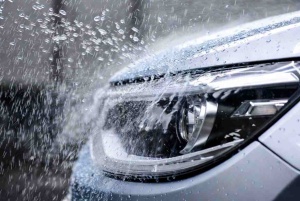
The hydrophobic nature of ePTFE creates high water entry pressure (WEP). Liquid water is repelled even under dynamic pressures from rain, high-pressure washing, or road splash. At the same time, water vapor molecules diffuse freely through the pores. This selective permeability is the key to “thoroughly” solving both condensation and ingress: the membrane does not merely block water—it actively manages the moisture balance by permitting vapor to exit while preventing liquid entry. Properly designed vent caps maintain this performance across the full operating temperature range of automotive lighting (typically −40 °C to +120 °C or higher).
Achieving Reliable Ingress Protection Ratings
ePTFE vent caps are engineered to support high ingress protection levels required for exterior automotive lighting, commonly IP67, IP68, or IP69K depending on housing design and mounting. The membrane and sealing interfaces resist dust, fine particles, and water under immersion or high-pressure spray conditions. Durability testing includes vibration, thermal shock, pressure cycling, UV exposure, and compatibility with automotive fluids. These characteristics ensure the vent continues to function throughout the vehicle’s service life without degradation that could reintroduce condensation or leak paths.
Key Material and Design Advantages for Lighting Applications
ePTFE offers excellent chemical resistance, UV stability, and mechanical strength in thin, lightweight formats. Vent cap housings (often engineered plastics or metals) protect the membrane from physical damage while providing secure mounting. Adhesive versions enable quick, tool-free installation on flat surfaces; threaded or snap-fit designs suit specific headlight geometries. The low profile and customizable airflow characteristics allow designers to match venting performance to housing volume and thermal load without compromising optical clarity or aesthetics.
Integration Best Practices for Headlight Assemblies
Effective implementation requires strategic placement—typically on the rear housing or in a protected lower position—to optimize pressure equalization paths while minimizing direct exposure to high-velocity water or debris. Airflow capacity should be sized to the internal volume and expected temperature cycles so that pressure differentials remain low. Multiple vents may be used for redundancy in larger assemblies. Validation should include real-world thermal cycling, humidity exposure, and spray testing to confirm condensation remains below acceptable thresholds and no liquid ingress occurs. Collaboration with membrane specialists helps optimize pore structure, lamination, and housing interface for specific lamp designs.
Long-Term Benefits and Reliability Considerations
By maintaining internal dryness and pressure balance, ePTFE vent caps help preserve light output clarity, protect sensitive electronics, and extend the functional life of headlight assemblies. Reduced warranty claims related to fogging or water damage improve customer satisfaction and lower total cost of ownership. The technology supports modern LED and matrix lighting systems that generate less heat but still experience temperature swings and require reliable environmental protection.
Expertise in ePTFE Venting Solutions
With more than ten years of specialization in ePTFE membranes and high-performance protective venting products, companies such as Spider(Xiamen) Technology Co., Ltd. bring deep material science knowledge and application experience to automotive lighting challenges. Their R&D teams, including professionals with advanced degrees in polymer materials, invest a significant portion of revenue annually in innovation to push performance boundaries. Quality systems aligned with ISO 9001 and relevant automotive standards, together with comprehensive third-party validations (SGS, CE, RoHS, REACH, and others), support consistent, traceable components suitable for demanding exterior lighting applications. Products have been supplied to global markets and leading manufacturers seeking reliable condensation control and ingress protection.
For technical consultation, product specifications, custom vent cap development, or samples tailored to your headlight designs, contact weitaiyan@spider-amoy.com.
By SST R&D Engineering Team, Spider(Xiamen) Technology Co., Ltd.