


ePTFE Protective Vent Alternatives for Auto & Electronics
Engineers specifying sealed housings for automotive electronics and outdoor devices often start with ePTFE protective [...]
Sep

What Are Protective Vents for Sealed Electronics?
A sealed electronic housing is built to keep water, dust, and salt out. That same [...]
Sep

How ePTFE Works: Pore Size, WEP, and Airflow
How ePTFE Works: Pore Size, WEP, and Airflow A protective vent is useful only when [...]
Sep
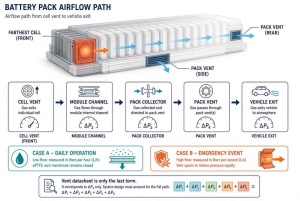
Battery Pack Vent Count: Module vs Pack Path Sizing
The question is rarely “how many holes does a catalog recommend.” It is whether gas [...]
Sep
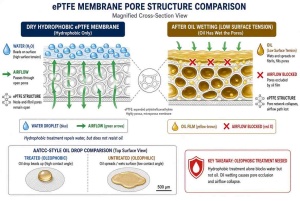
Oil Mist Clogging in Oil-Cooled Motors: Why Vents Fail
Oil-cooled motors and nearby electronic-control housings fail vents in a way water never does. The [...]
Sep
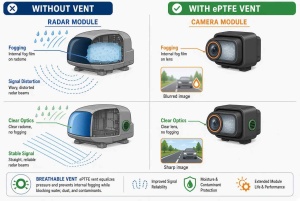
Why ECU, Radar & Camera Modules Need Breathable Vents
A fully sealed housing looks like the safest design for an ECU, domain controller, radar [...]
Aug

Protective Vent Installation Best Practices
A protective vent only works if air can reach the membrane and liquid cannot bypass [...]
Aug
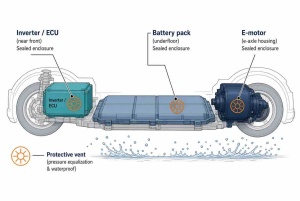
Why Protective Vents Matter for New Energy Vehicles
New energy vehicles pack more sealed electronics into harsher places than a conventional powertrain ever [...]
Aug
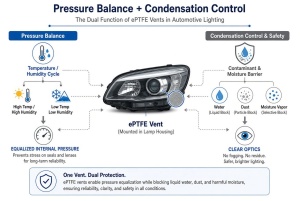
ePTFE Protective Vents for Automotive Lighting
Automotive lighting systems—headlamps, fog lamps, rear combination lamps, and daytime running lights—operate in demanding environments. [...]
Aug